
Last Updated: November 2, 2026
Quick Summary
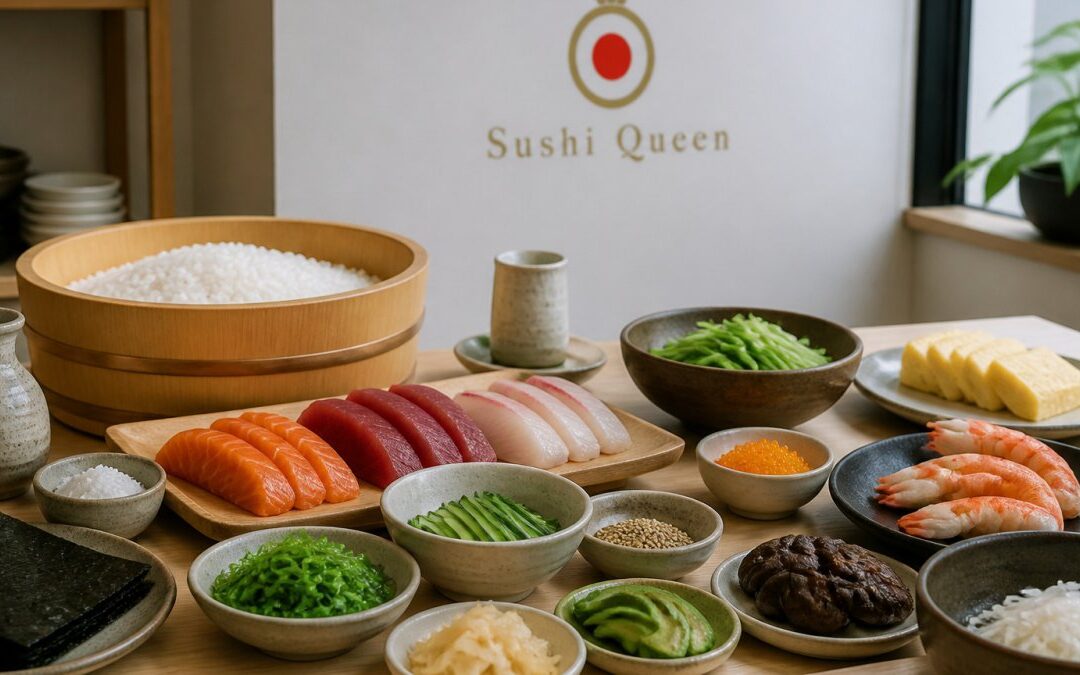
Traditional sushi ingredients are a short list: short-grain rice seasoned with vinegar, nori for some styles, and fresh fish or vegetables as the topping or filling. Wasabi, pickled ginger and soy sauce complete the plate. The rice is the foundation of the dish and is the component most often done badly outside Japan.
- Use short-grain Japanese rice, such as Koshihikari, rather than long-grain rice like basmati or jasmine.
- Seasoned sushi vinegar starts at about 2 tablespoons rice vinegar, 1 tablespoon sugar and 1 teaspoon salt per 2 cups rice.
- Fold seasoned vinegar into hot rice with a wooden paddle while fanning it to cool and add gloss.
- Store nori in an airtight container, since it softens quickly once exposed to moisture.
- Check imitation wasabi labels; real wasabi lists wasabi first, while most imitations list horseradish and mustard first.
Table of Contents
- What Goes Into Traditional Japanese Sushi
- Sushi Rice Ingredients: Short-Grain Rice and Sushi Vinegar
- Nori for Sushi: Choosing and Storing Seaweed
- Traditional Sushi Fish: Varieties, Sourcing and Safety
- Real Wasabi in Sushi: How to Tell It Apart From Imitations
- Vegetable Fillings, Pickles and Condiments
- Regional Variation, Substitutions and Dietary Needs
- Stocking Your Pantry: Quantities, Storage and Shelf Life
- Booking Sushi Classes or Catering With Sushi Queen
- Frequently Asked Questions
What Goes Into Traditional Japanese Sushi
Traditional sushi rests on a short list of core sushi ingredients: short-grain rice seasoned with vinegar, a sheet of nori for some styles, and fresh fish or vegetables as the topping or filling. Condiments such as wasabi, pickled ginger and soy sauce complete the plate. Many home cooks assume that sushi needs a long list of specialist products, but the traditional approach to sushi ingredients is minimalist, and each one is chosen to support the others.
The distinction that matters most is between the rice and everything else. Sushi rice is the foundation of the dish, and it is the component most often done badly outside Japan. The fish gets the attention, but seasoned rice at the right temperature and texture is what separates a restaurant-quality piece from a disappointing one.
Sushi Rice Ingredients: Short-Grain Rice and Sushi Vinegar
Sushi rice is a specific product, not any rice that happens to be sticky. It is a short-grain Japonica variety that becomes tender and slightly clingy when cooked, which allows the grains to hold together without becoming mush. The two ingredients that matter are the rice itself and the seasoned vinegar folded through it; everything else in this section is about getting those two right.
Choosing the Right Short-Grain Rice
Look for packaging that specifically says sushi rice or Japanese short-grain rice. Long-grain rice, basmati and jasmine behave very differently: they stay separate when cooked and will not form the cohesive bed that sushi requires. Many supermarkets and Asian grocers stock Japanese short-grain rice, and the difference in texture is noticeable from the first mouthful. Koshihikari is the best-known variety and is prized for its balance of sweetness and stickiness; Calrose and other medium-grain rices are common cheaper substitutes that work but give a firmer, less glossy result.
Freshness matters more than most home cooks expect. Rice is a living grain and its aroma fades with age, so check the packing or harvest date where it is shown and buy in quantities you will use within a few months. Store it in a cool, dark cupboard in an airtight container; refrigeration is unnecessary and can cause condensation.
Seasoning Rice: Vinegar, Sugar and Salt
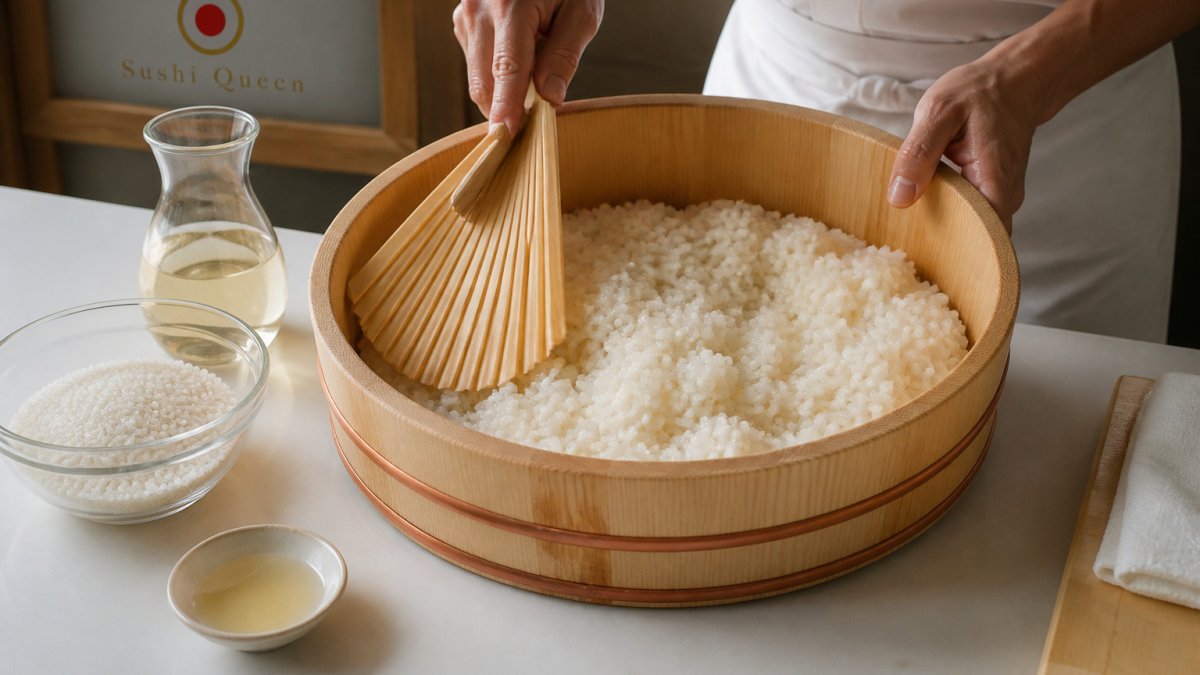
Seasoned sushi vinegar is made from rice vinegar with sugar and salt added, and it gives sushi rice its characteristic tang and sweetness. A workable starting ratio for one batch is roughly 2 tablespoons of rice vinegar, 1 tablespoon of sugar and 1 teaspoon of salt per 2 cups of uncooked short-grain rice, adjusted to taste. Warm the mixture gently until the sugar and salt dissolve, then fold it into the hot rice with a wide wooden paddle while fanning the rice to cool it quickly. Fanning gives the rice a glossy finish and stops it from becoming soggy.
A common pattern is to cook the rice slightly firmer than you would eat it plain, because the vinegar continues to soften the grains as it is absorbed. Fold rather than stir: a cutting motion with the paddle keeps grains intact, and over-mixing crushes them into paste. Aim to bring the rice down to body temperature within about ten minutes of seasoning.
Watch out: many people over-season, adding so much sugar that the rice tastes like dessert. Start with a modest amount, taste a warm spoonful, and adjust. Commercial sushi vinegar saves time, but reading the label for added sugar and salt helps you match the seasoning to your own taste.
Troubleshooting Rice Texture
If the rice turns out mushy, the usual causes are too much water, insufficient rinsing or stirring during cooking; rinse until the water runs almost clear and resist opening the lid. If it is crunchy in the centre, the heat was too high or the resting time too short, let it steam off the heat for ten minutes before seasoning. Rice that tastes flat usually needs more salt rather than more sugar, and rice that looks dull has often been cooled too slowly or not fanned at all.
Japanese Names for the Rice Components
A short glossary helps when reading recipes or shopping: kome is rice, sushi-mai is sushi rice, su is vinegar, sushi-zu is seasoned sushi vinegar, shamoji is the wooden paddle and hangiri is the wide wooden tub used for cooling and absorbing excess moisture. Recognising these terms makes it easier to follow traditional instructions and to ask for the right product in a shop.
Nori for Sushi: Choosing and Storing Seaweed
Nori is dried, pressed seaweed, usually a species of Porphyra, sold as thin sheets. It provides the wrapper for maki rolls and hand rolls, and its subtle marine flavour complements the rice and fillings. Good nori is dark, glossy and crisp, with no yellowing or a dull, papery look.
Nori is extremely sensitive to moisture. Once opened, store it in an airtight container with a food-safe desiccant, or keep it sealed in its original packet in a cool, dry cupboard. Sheets that have softened can often be re-crisped by toasting briefly over a low flame or in a dry pan, though they will never be quite as good as fresh ones. Buy in quantities you will use within a few weeks.
Traditional Sushi Fish: Varieties, Sourcing and Safety
Fish is the topping in nigiri and a common filling in maki. Traditional varieties include tuna (maguro), salmon (sake), yellowtail (hamachi), sea bream (tai) and mackerel (saba), along with shellfish and cured fish. Each species has a different texture and fat content, and experienced chefs choose fish to suit the piece they are making rather than using one type for everything. Mackerel, for example, is usually cured in salt and vinegar before use, while sea bream is often served with a little salt and citrus rather than soy.
Sourcing Fish for Raw Consumption
Sushi-grade is a trade term rather than a legal standard, so it is worth asking your supplier how the fish was caught, handled and frozen. Reputable fishmongers can tell you the species, the catch area and the handling history, and many will prepare a piece specifically for raw use on request. Look for fish that smells of the sea rather than ammonia, has bright clear eyes, firm springy flesh and no dulling at the edges. Ask whether the fish has been previously frozen, because that affects both safety and texture.
Freezing and Parasite Control
Parasites such as anisakis can be present in raw fish, and freezing according to appropriate parameters is a standard precaution (Freezing fish, fishery products and treatment for parasites). Most practitioners find that home freezers are not reliably cold enough to treat fish safely, so the safer route is to buy fish that a supplier has already frozen to the required standard or to choose species and preparations that are cooked or cured. The Food Standards Agency publishes guidance on the safe preparation of raw fish that is worth reading before you serve sushi at home (Freezing fish, fishery products and treatment for parasites). Keep raw fish chilled throughout, use separate boards and knives from ready-to-eat ingredients, and use it promptly rather than holding it for later. If you want to practise these skills with an instructor, you can book a hands-on sushi cooking class in London that covers rice and fillings in person.
Sustainable Sourcing
Sourcing responsibly is part of treating the ingredient with respect. Look for labels and advice from recognised schemes and ask your fishmonger about the stock status of the species you are buying. Oily fish such as mackerel and salmon are generally more robust choices than some long-lived predatory species, and farmed options can be a sound alternative when they are well managed. Buying whole fish and breaking it down yourself gives you more control over freshness and reduces waste.
A Short Glossary of Fish Names
Maguro is tuna, sake is salmon, hamachi is yellowtail, tai is sea bream, saba is mackerel, ebi is prawn, ika is squid and tako is octopus. Learning the Japanese names makes it easier to follow traditional recipes and to ask for the right fish at the counter.
Real Wasabi in Sushi: How to Tell It Apart From Imitations
Wasabi is a rhizome from the plant Eutrema japonicum, grated to a bright green paste that has a clean, sinus-clearing heat that fades quickly. Much of the wasabi sold outside Japan is in fact horseradish, mustard and green colouring, and the imitation is often served without anyone noticing. Real wasabi is more expensive and perishable, which is why it is less common.
To tell the difference, look at the ingredient list on prepared pastes. Real wasabi products list wasabi as the main ingredient, while most imitations list horseradish and mustard first. Freshly grated wasabi has a more complex, slightly sweet aroma and a heat that builds more gently than horseradish. If a paste tastes harsh and lingers in the nose for a long time, it is almost certainly horseradish-based.
Vegetable Fillings, Pickles and Condiments
Vegetable fillings are central to many maki rolls and to the vegetarian options that many diners now expect. Cucumber is the classic choice for its cool crunch, and avocado adds richness. Traditional vegetable fillings include kanpyo (dried gourd strips), shiitake mushrooms, and pickled radish (takuan), which brings a bright, yellow crunch.
Pickles and condiments complete the experience. Gari, the thin pink pickled ginger served between pieces, cleanses the palate. Soy sauce is used sparingly, and dipping nigiri fish-side down rather than rice-side down keeps the rice intact. Sesame seeds, shiso leaves and a small amount of umeboshi (salted plum) appear in some regional and home preparations.
Regional Variation, Substitutions and Dietary Needs
Sushi varies considerably across Japan. Edomae-style sushi, associated with Tokyo, relies on fish that has been cured or lightly marinated, while sushi in western Japan often features more cooked and pressed preparations. Within the UK, cooks adapt traditional recipes using local produce, and it is perfectly reasonable to do so as long as you understand what the traditional component contributes.
Substitutions are common. Cauliflower rice is sometimes used as a low-carb alternative, but it does not replicate the sticky texture or the vinegar seasoning, so the result is a different dish. For guests with dietary requirements, always confirm ingredients before serving. Soy sauce contains wheat, some vinegars and sauces contain allergens, and fish fillings may be cooked in shared equipment. Being clear about what is in each dish protects guests with allergies, and a good caterer will be able to tell you exactly what each component contains. Enhancing the flavor profile of these components often involves balancing salt with umami ingredients, a technique that provides depth to the palate while minimizing the need for excessive sodium in your kitchen.
Stocking Your Pantry: Quantities, Storage and Shelf Life
A basic sushi pantry includes Japanese short-grain rice, rice vinegar or ready-seasoned sushi vinegar, nori, soy sauce, pickled ginger and wasabi. Buy rice in quantities you will use within a few months, store it in a cool, dark place in an airtight container, and keep vinegar sealed. Nori should be treated as perishable once opened, as described above. Fresh fish and vegetables need refrigeration and should be used on the day of purchase or as close to it as possible.
Check labels for best-before dates and open condiments according to the manufacturer’s instructions. Dried and pickled items generally keep well, but flavour fades over time, so it is worth replacing older stock rather than using it for a special occasion.
Booking Sushi Classes or Catering With Sushi Queen
If you would rather learn these techniques in person or have sushi prepared for your event, Sushi Queen offers hands-on sushi making classes in London and bespoke catering for private and corporate functions. Our team can explain what goes into each dish, so guests know exactly what they are eating.
For current class dates, group options and catering menus, visit the Sushi Queen website or get in touch for a quote. You can compare the sushi making classes in London on offer, including teppanyaki and sake tasting options. Pricing depends on quantity, dates and delivery, so an individual quote is the most reliable way to plan your budget. Browse the private sushi catering menu to see the dishes available for dinner parties and birthdays before you get in touch.
Frequently Asked Questions
What ingredients are traditionally used in Japanese sushi?
Traditional sushi is built on a small set of core ingredients: short-grain Japanese rice seasoned with rice vinegar, sugar and salt, sheets of nori seaweed, fresh fish or seafood, and vegetables such as cucumber or kanpyo. Wasabi, pickled ginger, and soy sauce are served alongside rather than inside the roll. Regional and chef-level variations exist, but these components define most classic styles such as maki and nigiri.
What type of rice is used for traditional sushi?
Traditional sushi uses Japanese short-grain rice, which becomes sticky enough to hold its shape once cooked and seasoned. Medium-grain Japanese rices are also widely used. Long-grain rices such as basmati or jasmine do not bind well and will fall apart when rolled or shaped. Rinse the rice thoroughly before cooking, then season it with sushi vinegar while it is still warm.
Is real wasabi used in sushi?
Real wasabi, made from the grated rhizome of Wasabia japonica, is expensive and short-lived once grated, so many restaurants and supermarkets serve a paste made from horseradish, mustard and green colouring instead. Authentic wasabi has a fresher, more floral heat that fades quickly. Ask whether the wasabi is grated fresh or check the ingredient list for horseradish, which signals a substitute. Check current supplier listings directly for product details.
What is sushi vinegar made from?
Sushi vinegar is rice vinegar blended with sugar and salt. Mild rice vinegar is the base, and the sugar and salt balance its acidity. Many home cooks make their own by warming the mixture until the sugar and salt dissolve, then cooling it before using it on warm rice. Ready-made sushi vinegar is also sold in most UK Asian grocers.
What fish is traditionally used in sushi?
Traditional sushi fish includes tuna (maguro), salmon, sea bream (tai), yellowtail (hamachi), mackerel (saba) and squid (ika), among others. Fish intended to be eaten raw should be bought from a supplier who can confirm it has been handled and frozen to appropriate food safety standards. Follow current UK Food Standards Agency guidance on eating raw or lightly cured fish, and buy from reputable fishmongers who can explain how their fish was sourced and stored.
What is the difference between sushi-grade fish and regular fish?
Sushi-grade is a trade term rather than a regulated standard, so it is not a guarantee of safety on its own. It generally refers to fish that has been handled carefully and, where needed, frozen to kill parasites before being sold for raw consumption. Ask your fishmonger how the fish was caught, handled and frozen, and whether it is suitable for raw eating. Keep raw fish chilled and use it within a day or two of purchase.
Do traditional sushi rolls contain avocado?
Classic Japanese rolls rarely include avocado. Traditional fillings focus on fish, cucumber, kanpyo (dried gourd), natto, umeboshi (pickled plum) and shiso leaf. Avocado became popular in rolls outside Japan, particularly in California-style sushi, and is now common in UK restaurants. Ask for it to be left out if you are following a traditional style.
What ingredients are used to season sushi rice?
Sushi rice is seasoned with sushi vinegar, a blend of rice vinegar, sugar and salt. The vinegar gives the rice its tang, the sugar softens the acidity, and the salt balances the flavour. Seasoning is added while the rice is still warm and mixed in with a cutting motion so each grain is coated without being mashed. Adjust the proportions to taste, starting with a small amount and adding more gradually.
