
Quick Summary
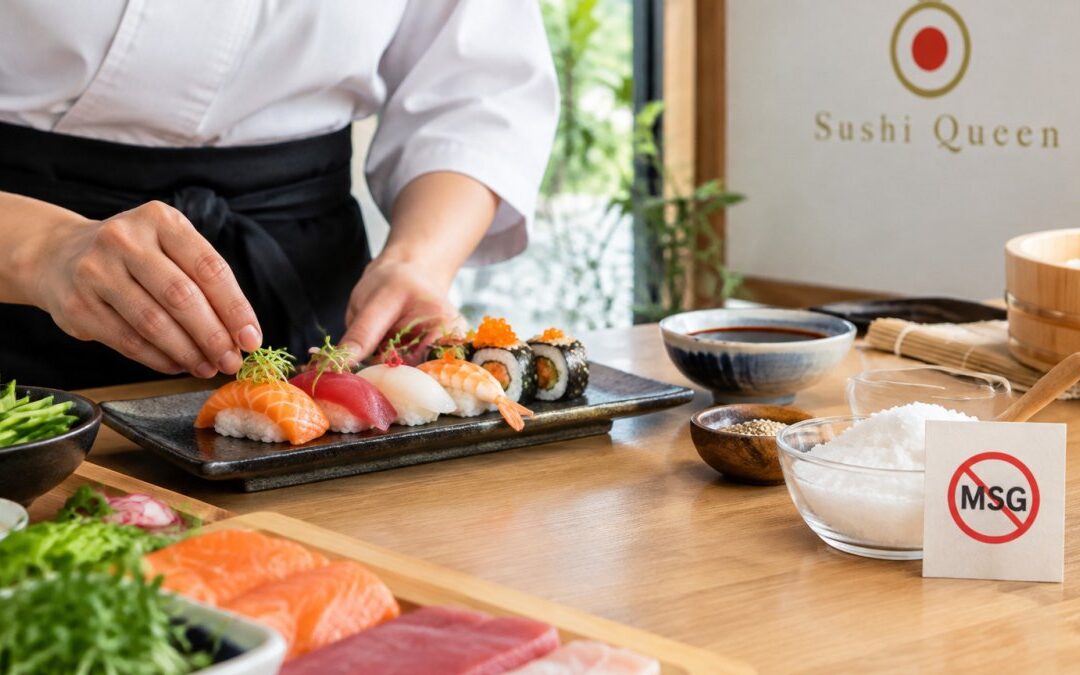
Avoiding MSG in Japanese catering means checking ingredient labels, not just asking whether the chef adds MSG, because it is often hidden in dashi powder, soup bases, sauce blends and pre-mixed dressings. Agree the menu and written ingredient lists with your caterer before booking, and ask how cross-contact will be handled on the day.
- Added MSG is usually built into stock, seasoning blends or pre-mixed sauces rather than sold as a lone shaker.
- Look for グルタミン酸ナトリウム or E621 on labels, plus umami enhancers and yeast or protein extracts.
- Highest-risk dishes include miso soup from a base, noodle broths, teriyaki glazes, tempura dipping sauce and furikake rice.
- Ask caterers to confirm ingredient lists in writing and keep them with your booking confirmation.
- Ask how utensils, chopping boards and fryer oil will be separated for dishes kept free of a specific ingredient.
Table of Contents
- Why MSG Shows Up in Japanese Catering and What Counts as Added
- Japanese Sauces and Seasonings Containing MSG to Check
- How to Ask a Caterer About MSG Before You Book
- Frequently Asked Questions
Why MSG Shows Up in Japanese Catering and What Counts as Added
Planning a private event with Japanese food? Many London hosts ask about avoiding msg in Japanese catering before booking. Start by understanding where glutamate comes from: some is natural, some added.
Naturally occurring glutamate is in dashi, seaweed, aged fish and soy products; added MSG is a separate purchased seasoning. Some caterers say “no MSG” but still use stock or seasoning blends that contain it, so ask about ingredients, not just the name.
Japanese Sauces and Seasonings Containing MSG to Check
Added MSG rarely arrives as a lone shaker; it is usually built into bought-in stock, seasoning blends or pre-mixed sauces, so label reading matters more than asking whether the chef “adds MSG”.
- Dashi powder and granules. Hon-dashi and instant dashi commonly contain MSG; scratch-made dashi with kombu and katsuobushi is different.
- Instant soup bases and broth concentrates. Miso soup bases, noodle broths and hot-pot concentrates are often glutamate-based.
- Soy sauce blends and seasoning mixes. Pure brewed shoyu lists no added MSG, but teriyaki, ponzu, yakiniku and “seasoning soy” often do.
- Pre-made tempura batters and dipping sauces. Batter mixes and tentsuyu sometimes use stock powder or yeast extract.
- Furikake and rice seasonings. These often contain soy sauce powder, bonito extract and flavour enhancers.
- Pre-mixed dressings and marinades. Goma dare, wafu dressing and pre-marinated meats can carry hidden glutamate-rich ingredients.
When reading a Japanese ingredient list, look for:
- MSG by name: グルタミン酸ナトリウム or E621.
- Umami enhancers: イノシン酸ナトリウム (E631) and グアニル酸ナトリウム (E627) signal a formulated seasoning.
- Yeast and protein extracts: 酵母エキス, たん白加水分解物 and オートミール酵母 are glutamate-rich even though some caterers treat them as “no MSG”.
- Stock powders: だしの素 means instant dashi powder, a strong signal of a glutamate base.
“無添加” (no additives) may still contain naturally glutamate-rich kombu, shiitake or bonito, so it is not a guarantee of no added glutamate.
Highest-risk items tend to be miso soup from a base, noodle broths, teriyaki and yakiniku glazes, tempura dipping sauce, gyoza with stock powder, and rice with furikake.
The article lists the common sources of added MSG in Japanese cooking and what to look for on labels.
| Item | Typical source of added MSG | Label term to look for |
|---|---|---|
| Dashi | Hon-dashi and instant dashi | だしの素 (instant dashi powder) |
| Soup bases | Miso soup bases, noodle broths, hot-pot concentrates | Glutamate-based bases |
| Sauces and blends | Teriyaki, ponzu, yakiniku, seasoning soy | Glutamate-based blends |
| Batters and dips | Pre-made tempura batters, tentsuyu | Stock powder or yeast extract |
| Rice seasonings | Furikake | Soy sauce powder, bonito extract, flavour enhancers |
| Dressings and marinades | Goma dare, wafu dressing, pre-marinated meats | Hidden glutamate-rich ingredients |
| Umami enhancers | Formulated seasonings | グルタミン酸ナトリウム (E621), イノシン酸ナトリウム (E631), グアニル酸ナトリウム (E627) |
How to Ask a Caterer About MSG Before You Book
Catering lets you agree the menu in advance, so use that window to ask detailed questions and get answers in writing before any food is prepared.
Separate two often-blurred questions: are you avoiding added MSG as a seasoning, or all glutamate, including natural glutamate in kombu, shiitake, bonito, soy sauce and aged ingredients? Most hosts mean the first; a guest with a diagnosed sensitivity may need the second.
A practical checklist for your first email or call:
- Do you add MSG, or use stock powders, seasoning blends or sauces containing it, in any proposed dish?
- Can you send ingredient lists or labels for your dashi, soy sauce, miso, dressings and bought-in sauces?
- Which sauces and stocks are made in-house versus bought in?
- Can you prepare the dishes without added seasonings, and what would you use instead?
- How will shared utensils, surfaces and fryer oil be handled for dishes kept free of a specific ingredient?
- Who checks final plates against the agreed specification on the day?
Ask for answers by email and keep them with your booking confirmation; a written record gives the kitchen something concrete to work from.
On cross-contact, ask how the caterer will separate utensils, chopping boards, fryer oil and serving tongs, and whether the dish will be plated separately. Beyond kitchen logistics, scrutinizing the ingredient lists of pre-prepared condiments remains essential, as learning to identify clean label sauces provides a reliable method for maintaining your standards throughout the entire menu.
Agree the menu in two tiers: naturally lower-risk dishes (plain sashimi, edamame, plain grilled fish, rice without furikake) and dishes needing specific adjustment (miso soup, noodle broths, teriyaki glazes, tempura dipping sauce).
A verbal “no MSG” on the day is not the same as a checked ingredient list, because stock powders and blends are often used by staff who did not take your enquiry.
To understand the cooking yourself, our Learn to Make Sushi Online course shows how to build flavour without bought seasonings, and you can book a London Japanese cooking class for hands-on practice. For a dedicated chef, see how to hire a private sushi chef in London; corporate groups can explore our corporate sushi catering options.
Frequently Asked Questions
How can I ask a Japanese caterer to avoid added MSG?
Ask for the request in writing when you book, stating that no added monosodium glutamate should be used in any dish, sauce or stock. Name the event date and guest count so the caterer can plan purchasing and preparation. Ask whether the kitchen uses ready-made dashi, seasoning blends or pre-mixed sauces, since these are the most common sources of added MSG. Request written confirmation of the agreed menu and ingredients before the event, and ask whether the caterer can check labels on any products they buy in.
Does soy sauce contain MSG?
Traditionally brewed soy sauce, known in Japanese as shoyu, is produced by fermenting soybeans and wheat, and it naturally contains glutamate released during that process. This is not the same as added monosodium glutamate. Some manufacturers add extra glutamate or yeast extract to boost savoury flavour, so the ingredient label is the safest guide. Check whether the product lists monosodium glutamate or hydrolysed protein among its ingredients, and ask your caterer which brand they use.
Is MSG the same as naturally occurring glutamate?
No. Monosodium glutamate is a refined, added seasoning, while naturally occurring glutamate is present in foods such as tomatoes, aged cheese, mushrooms and fermented soy products. Both contribute to umami, the savoury taste central to Japanese cooking. If your guests want to avoid added MSG, you can still serve naturally savoury dishes, but you should ask your caterer to confirm that no MSG has been added to stocks, seasonings or pre-prepared components.
